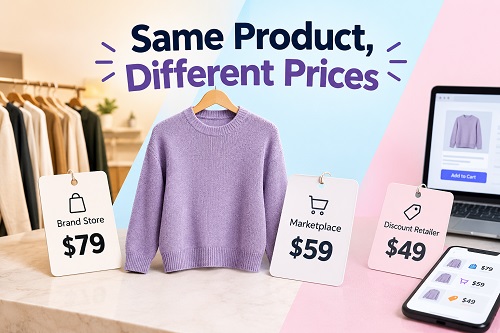
If you shop for clothes online, you may have noticed that the same dress, sneakers, handbag, or jacket can cost less on one fashion website than another. These fashion price differences are common across brand stores, online marketplaces, and discount retailers. Understanding why the same clothes cost different amounts online can help you compare clothing prices, find the best fashion deals, and avoid misleading discounts.
The reasons behind different prices for the same fashion product include retailer pricing strategies, seasonal sales, brand positioning, inventory levels, coupon codes, regional taxes, and shipping costs. One store may offer a lower selling price, while another provides extra savings through promotional offers or bank discounts. However, the cheapest fashion price is not always the best deal. By comparing the exact product, checking price history, verifying the seller, and calculating the final checkout cost, you can identify genuine fashion discounts and make smarter online shopping decisions. This guide explains how fashion pricing works and how to save money when buying branded clothing, shoes, and accessories online.
Why Identical Fashion Products Have Different Prices
One of the main reasons the same fashion product costs different amounts at different stores is that brands and retailers do not always use the same pricing strategy. A fashion brand might recommend a retail price, but individual retailers can adjust their selling prices according to their business expenses, target customers, competition, and stock levels.
For example, the same pair of sneakers might cost ₹6,000 on a brand’s official website and ₹5,400 at an authorized retailer during a promotional sale. Another shopping platform might offer an additional bank discount that reduces the final payment even further. Although the product is identical, each seller determines how to compete for customers and maintain profitability.
These differences are especially common when comparing fashion websites, department stores, online marketplaces, and brand-owned stores. Before deciding which offer provides the best value, shoppers should check whether the item has the same product code, size, color, material, and included accessories.
Brand Value Can Influence Fashion Prices
Fashion pricing is not determined by manufacturing costs alone. Brand reputation and perceived value also influence what customers are willing to pay. Established designer labels can charge premium prices because customers associate their products with exclusivity, craftsmanship, heritage, design, or status.
Even within the same fashion category, two products with similar materials may have very different prices because one brand has stronger recognition or positions itself as a luxury label. Similarly, the same branded item may have different prices across retailers because some stores focus on premium service while others compete through discounts and lower operating costs.
This explains why a higher price does not automatically mean a product is better made. When shopping for fashion online, consider the actual materials, construction, comfort, durability, and care requirements alongside the brand name. Comparing these details can help you judge whether the price represents genuine value or mainly reflects brand positioning.
How Seasonal Sales Change Clothing Prices
Seasonal promotions are another important reason fashion prices vary. Retailers frequently reduce prices during end-of-season sales, holiday shopping events, clearance campaigns, and major shopping festivals. These discounts help stores sell older collections and make space for incoming inventory.
A jacket priced at ₹4,500 at the beginning of the season might later be available for ₹3,000 when demand declines or a new collection arrives. The retailer may still earn a profit at the reduced price because the original price includes room for operating expenses, expected markdowns, and promotional activity.
However, not every advertised fashion discount represents the same level of saving. Some retailers offer temporary price reductions, while others advertise discounts against a recommended retail price that may not reflect the product’s recent selling price. Checking price history and comparing offers across multiple stores can help shoppers distinguish attractive deals from ordinary pricing presented as a special promotion.
Online Shopping Platforms Use Different Pricing Strategies
Online fashion retailers compete for customer attention through promotions, loyalty rewards, exclusive coupons, free shipping, and special payment offers. As a result, the total amount paid for the same product can differ even when its displayed price initially appears identical.
One website may sell a shirt for ₹2,000 and provide a 10% coupon code. Another may list it for ₹1,850 without a coupon. A third may offer free delivery or an extra discount on eligible payment methods. Comparing only the displayed product price would overlook these differences.
Retailers may also run platform-specific campaigns or offer different deals to members of their loyalty programmes. In some cases, discounts depend on the minimum order value, payment method, customer eligibility, or selected product category. Reviewing the terms and calculating the final checkout price provides a more accurate comparison than relying on promotional headlines alone.
Regional Pricing, Taxes and Delivery Costs Matter
The same fashion item can have different prices in different countries or regions because of import duties, sales taxes, currency exchange rates, transportation expenses, local operating costs, and market demand. International fashion brands may adjust their regional prices to suit local purchasing power and competitive conditions.
For example, a handbag sold in one country may have a higher listed price elsewhere because the imported product incurs additional costs. Differences in tax presentation can also affect comparisons: one website may display a tax-inclusive price, whereas another may add certain charges at checkout.
Delivery fees, customs duties, and return shipping can further change the overall cost of an international fashion purchase. Before ordering from an overseas website, check whether the listed price includes applicable taxes, whether import charges may apply, and how returns are handled. A lower advertised price is not necessarily the cheapest option once every cost is considered.
Inventory Levels and Demand Can Affect Fashion Discounts
Fashion retailers must balance product availability with customer demand. When a collection becomes popular, sizes and colors may sell out quickly, reducing the need for discounts. When demand slows or too much inventory remains, retailers may lower prices to encourage purchases.
This is particularly common with seasonal clothing, trend-driven accessories, and collections that change frequently. A retailer with limited stock may keep a product at full price, while another holding excess inventory may reduce the price substantially. The difference does not necessarily indicate different product quality; it may simply reflect different stock positions and sales targets.
Shoppers can use this information to make better purchasing decisions. Classic items such as plain T-shirts, versatile trousers, and everyday sneakers may be worth comparing across several retailers. Trend-specific items, on the other hand, may receive deeper markdowns when their popularity declines.
How to Check Whether a Fashion Discount Is Genuine
Finding the lowest price requires more than looking for the largest discount percentage. Start by comparing the exact product on the official brand website and reputable retail platforms. Product names can be almost identical even when materials, model numbers, fit, or product versions differ.
Next, review the original and current selling prices. A large discount claim may look attractive, but the final price matters more than the percentage shown in a banner. Compare the product’s recent price where reliable price-history information is available, and check whether the deal applies to the size or color you actually want.
It is also important to verify the seller’s identity, customer reviews, return policy, and product authenticity. Extremely low prices from unknown sellers can sometimes indicate counterfeit goods, misleading listings, or products with different specifications. Shopping through official stores and authorized retailers can reduce these risks.
Finally, calculate the total checkout cost, including delivery fees and any applicable charges. A slightly more expensive listing may provide better value if it includes free delivery, easier returns, a valid warranty, or stronger purchase protection.
Smart Ways to Save Money on Fashion Shopping
To save money on clothing and accessories, compare prices before purchasing rather than buying immediately after seeing a discount banner. Add desired products to a wishlist, monitor seasonal sales, and subscribe to official retailer newsletters when doing so provides access to relevant offers. Coupon websites can also help shoppers discover promotional codes, but every code should be checked for eligibility and validity before checkout.
Pay attention to the difference between a percentage discount and a fixed-amount offer. A 20% discount can provide greater savings on an expensive item, while a flat discount may be more valuable for a smaller purchase depending on the terms. Minimum spending requirements, excluded brands, and product restrictions can change the value of both offers.
It is also worth considering cost per wear. An inexpensive item that quickly loses its shape may offer less long-term value than a durable product that remains comfortable and useful for years. Shopping strategically means finding the best balance between price, quality, fit, and how often you will use the item.
Shop Smarter by Understanding Fashion Pricing
The same fashion product can have different prices because retailers follow different business models, apply separate promotional strategies, manage varying inventory levels, and operate in different markets. Brand positioning, taxes, shipping costs, seller competition, and seasonal demand can also influence the price shoppers see online.
Understanding these factors makes it easier to compare fashion prices, evaluate online clothing discounts, and recognize offers that genuinely save money. Rather than automatically choosing the listing with the biggest discount, check the exact product, seller reliability, final checkout price, and return conditions. With a little research and a thoughtful comparison, you can find better fashion deals, avoid misleading promotions, and get more value from every online shopping purchase.


 0
 0


