
Site Loading

The Future of E-Commerce:

Future e-commerce technology

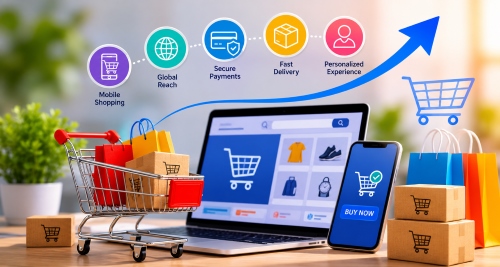
Future e-commerce trends transforming online shopping.

0 0
Read Time:6 Minute, 6 Second

E-commerce has transformed the way people shop, making it possible to purchase products and services from anywhere in the world with just a few clicks. Over the past decade, online shopping has evolved from a convenient alternative to traditional retail into a dominant force in the global economy. As technology continues to advance and consumer expectations change, the future of e-commerce is set to become even more innovative, personalized, and customer-focused.

Businesses are investing heavily in new technologies, artificial intelligence, automation, and digital experiences to meet the growing demands of online shoppers. The next generation of e-commerce will not simply focus on selling products online; it will focus on creating seamless, personalized, and immersive shopping experiences that make buying easier, faster, and more enjoyable than ever before.

Artificial Intelligence Will Power Smarter Online Shopping

Artificial intelligence is already transforming e-commerce, and its influence will continue to grow in the coming years. AI-powered systems help online retailers understand customer behavior, predict buying patterns, and provide personalized product recommendations based on browsing history and preferences.

Companies such as Amazon and Shopify are increasingly using AI to improve customer experiences, automate support, and optimize product discovery. Future online stores will become even smarter, offering highly personalized shopping journeys where customers receive recommendations tailored specifically to their interests, budgets, and shopping habits.

AI-powered chatbots and virtual shopping assistants will also become more sophisticated, providing instant customer support and helping shoppers find products quickly without needing human assistance.

Personalized Shopping Experiences Will Become the Standard

Modern consumers expect brands to understand their needs and preferences. The future of e-commerce will focus heavily on personalization, allowing businesses to create unique experiences for individual customers.

Advanced data analytics and machine learning technologies will enable online stores to display customized product recommendations, targeted promotions, and personalized content. Instead of seeing generic product catalogs, shoppers will increasingly encounter curated collections based on their previous purchases, browsing behavior, and interests.

Personalization will help businesses increase customer satisfaction while improving conversion rates and long-term customer loyalty.

Mobile Commerce Will Continue to Dominate

Smartphones have already become the preferred shopping device for millions of consumers worldwide. As mobile technology improves, mobile commerce, often called m-commerce, will continue to drive the future of online retail.

Consumers now expect fast-loading websites, seamless mobile checkout experiences, and mobile-friendly shopping apps. Businesses that prioritize mobile optimization will gain a significant competitive advantage as more purchases shift from desktop computers to smartphones and tablets.

The growth of mobile payment solutions, digital wallets, and one-click checkout systems will further simplify online shopping, reducing friction and encouraging more frequent purchases.

Voice Commerce Will Change How People Shop

Voice search technology is becoming increasingly popular thanks to smart assistants and connected devices. Products like Amazon Echo and voice assistants such as Google Assistant are changing how consumers interact with online stores.

In the future, shoppers will increasingly use voice commands to search for products, compare prices, reorder frequently purchased items, and complete transactions. Voice commerce will make shopping faster and more convenient, especially for busy consumers who prefer hands-free interactions.

Businesses that optimize their websites and product listings for voice search will be better positioned to capture this growing segment of online shoppers.

Augmented Reality Will Transform Product Visualization

One of the biggest challenges in e-commerce is helping customers understand how products will look or fit before making a purchase. Augmented reality technology is solving this problem by allowing shoppers to visualize products in real-world environments.

Retailers are already using AR tools that enable customers to virtually try on clothing, test makeup products, place furniture in their homes, or preview home décor items before buying. Companies like IKEA have demonstrated how AR can improve customer confidence and reduce return rates.

As augmented reality technology becomes more accessible, it will play a major role in improving online shopping experiences and helping customers make informed purchasing decisions.

Faster Delivery Will Become a Competitive Necessity

Consumers increasingly expect rapid delivery options when shopping online. The future of e-commerce will focus heavily on logistics innovation, same-day delivery, and faster order fulfillment.

Major retailers are investing in advanced warehouse automation, predictive inventory management, and smart logistics networks to reduce delivery times. Companies are also exploring autonomous delivery vehicles, drones, and robotic fulfillment systems to improve efficiency.

As delivery expectations continue to rise, businesses that can provide faster and more reliable shipping will gain a significant advantage in the competitive e-commerce marketplace.

Social Commerce Will Continue to Expand

Social media platforms are becoming powerful sales channels for brands and retailers. Consumers increasingly discover products through social content, influencer recommendations, and interactive shopping experiences.

Platforms such as Instagram, TikTok, and Pinterest are integrating shopping features directly into their platforms, allowing users to purchase products without leaving the app.

The future of e-commerce will see deeper integration between social media and online shopping, creating more opportunities for brands to engage with customers and drive sales through social commerce strategies.

Sustainable E-Commerce Will Gain Importance

Consumers are becoming increasingly aware of environmental issues and are looking for brands that prioritize sustainability. The future of e-commerce will involve greater transparency regarding sourcing, manufacturing, packaging, and shipping practices.

Businesses will focus on reducing waste, offering eco-friendly packaging, and promoting sustainable products to meet consumer expectations. Companies that demonstrate genuine commitment to sustainability will likely build stronger relationships with environmentally conscious shoppers.

Sustainable e-commerce practices will not only benefit the environment but also become an important competitive differentiator for brands.

Cross-Border E-Commerce Will Open New Opportunities

Advancements in digital payments, logistics, and global connectivity are making international shopping easier than ever before. Cross-border e-commerce is expected to continue growing as consumers gain access to products from retailers located around the world.

Businesses will increasingly expand into international markets, reaching customers beyond their domestic borders. Improved translation tools, localized shopping experiences, and international payment solutions will make global online shopping more accessible for both consumers and merchants.

This growth will create new opportunities for businesses while providing consumers with a wider range of products and brands.

Data Security and Customer Trust Will Become Even More Important

As e-commerce continues to grow, protecting customer data and maintaining trust will become increasingly critical. Consumers want assurance that their personal information, payment details, and shopping activity remain secure.

Online retailers will invest more heavily in cybersecurity technologies, fraud prevention systems, and secure payment solutions. Transparent privacy policies and strong security measures will play an essential role in building long-term customer relationships.

Businesses that prioritize customer trust and data protection will be better positioned for sustainable growth in the future digital economy.

Looking Ahead to the Next Era of Online Shopping

The future of e-commerce will be shaped by innovation, personalization, convenience, and customer experience. Artificial intelligence, mobile commerce, voice shopping, augmented reality, social commerce, and faster delivery systems will continue to redefine how consumers interact with online stores.

E-commerce is no longer simply about selling products online. It is becoming a highly personalized, intelligent, and immersive ecosystem that connects consumers with brands in entirely new ways. The coming years promise exciting opportunities for businesses and shoppers alike, making the future of e-commerce one of the most dynamic and transformative areas of the digital economy.


Happy
Happy
0 %
Sad
Sad
0 %
Excited
Excited
0 %
Sleepy
Sleepy
0 %
Angry
Angry
0 %
Surprise
Surprise
0 %

Average Rating

5 Star
0%
4 Star
0%
3 Star
0%
2 Star
0%
1 Star
0%

Leave a Reply

Your email address will not be published. Required fields are marked *

has been added to your cart

View Cart